
I grew up in an era where insects, bugs, and reptiles often found their way indoors. This was common in the bungalows where I grew up. The designated bungalows in the districts, the many circuit houses, the dak bungalows, were all constructed during the British era. The doors and windows in these bungalows were all painted green for some reason. The windows had classic shutters, and the doors had these heavy wooden bars for locking them. You’d lift the bar and fit it into a hook to keep the door closed.
I remember once I was in a hurry, rushing into my room. I grabbed the wooden bar to lock the door, but as I lifted it, I felt movement in my palm. I quickly let go, and a lizard fell out. It wasn’t a baby, but it wasn’t fully grown either—so it was a teenager. I screamed and jerked my hand away as it scurried under the bed. It was one of those moments that ‘sticks’ with you.
I learned early on to dust off my shoes before putting them on, just in case there were any critters inside. There usually were.
Living in these houses meant sharing the space with various creatures. If you visited forest bungalows, for instance Jaldapara Forest, in the Jalpaiguri district, you could find oversized lizards hanging out on the walls, just peacefully coexisting with the humans. It was quite the experience, sharing these spaces with wildlife. We’d go about our lives, and the lizards would go about theirs. It was all part of growing up in those places, and in a way, I look back on it as a cherished part of my upbringing.
Let’s talk about snakes—cobras, to be precise. These majestic reptiles seemed to have a peculiar fondness for dropping by unannounced. But there was always someone from the local constabulary or the local area nearby, who would be summoned to catch the snake. It was a regular feature. In Coochbehar, the cobra got inside the house, and someone came and caught it and took it away.
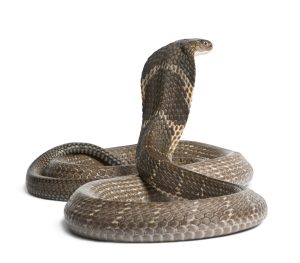
There were snakes in our Jalpaiguri bungalow. There were also snakes in Hyderabad.
In Hyderabad, at NPA, once a cobra tried to sneak inside the house. My brother who was 5 or 6 years old at the time, was asleep. I was outside playing. I am not sure who spotted the snake but someone did, and rushed off to call Jagannath.
Jagannath was many things but he was also the resident snake catcher. In those days there were no mobile phones. But people could reach other people on time, and people always arrived, in time.
He caught the snake, and I remember him casually holding it, its scaly, slimy, body wrapped around his wrist like it was just another accessory. He then strolled off like it was no big deal, gripping the snake in one hand and his bicycle in the other, as cool as ever.
Then there was that one time when a cobra decided to drop by our backyard. Our domestic help, a tall and strong tribal from Bihar, took one look at this uninvited guest and decided to take action. He grabbed the snake by the tail and tried to yank it out of the drain it had slithered into. The snake, not being the most cooperative creature, held on for dear life. It was like watching someone in a tug-of-war match.
Our guy finally gathered all his strength and pulled the snake out, swung it over his head like a lasso, and slammed it onto the ground. The snake was just stunned, not harmed—just in case you’re wondering. By then, Jagannath had arrived to take it away. Just another day at the office.
We had this adorable little mango tree in our garden at NPA, and it grew these long, juicy mangoes that we called ‘kairi.’ There were five or six of them, ripe and ready to be picked. So, naturally, I ran over to grab one, and just as I was reaching out to pluck it, I felt something move. Turns out, there was a green-colored snake with a triangular head, lounging on a tiny branch right above my mango.
Of course, I did what any sensible person would do: I bolted back into the house faster than you could say “snake.” I wasn’t about to get into a mango dispute with a snake. Later that evening, I went back out to check if the snake had vacated its prime real estate. Sure enough, it had moved on. So, I took my mango and called it a day.
When we played among the rocks and dried leaves, it was almost guaranteed that we’d bump into a snake or two. We didn’t overthink it; we’d just turn around and run. Maybe it was the fearless nature of being kids, or maybe we just didn’t know any better. We’d see a snake, make a swift exit, and that was the end of it. Simple as that.
Of course, no snake saga would be complete without a hair-raising encounter or two. One time I stumbled upon what I thought was a harmless brown rectangular rock in the middle of a narrow path, on my way to the gym, around 4 o’clock in the afternoon, with bushes on either side. This was a short cut everyone took to go to the gym. However, as I jumped over it, I saw it move.
Turns out, it wasn’t a rock; it was a massive snake, likely a python. My brain processed that realization in record time. I leaped back over it, turned on my heel, and sprinted home as if my life depended on it. And let me tell you, I shattered the land-speed record that day. It took all of five seconds for me to process the information and run! I left that snake in the dust, probably wondering what all the fuss was about. But I wasn’t about to stick around to find out!
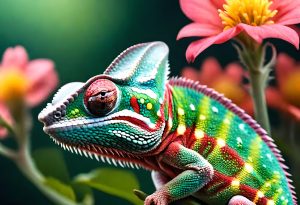
And then there were the chameleons, those masters of disguise who could blend seamlessly into their surroundings. I recall watching in awe as these marvels of nature changed colors before my very eyes. It was like a kaleidoscope of colours and adventure.
Looking back on those wild days, I can’t help but marvel at the sheer audacity of childhood. We faced everything head-on with a mixture of curiosity and reckless abandon. Those were simpler times, where the only thing that mattered was the next big adventure.
“The natural world is the greatest source of excitement; the greatest source of visual beauty; the greatest source of intellectual interest. It is the greatest source of so much in life that makes life worth living. Nature doesn’t need people—people need nature.” – David Attenborough