
The dark and the supernatural formed a part of my growing up, living in the grand, old bungalows of British-era India. There was something about the towering ceilings and vast corridors that invited shadows to play tricks on my mind. At night, the creaking sounds from the wooden floors felt like whispers of the past, as if the walls had stories to tell but only in hushed tones. The fear of ghosts wasn’t just a fleeting thought—it became my constant companion, following me through every room as I tiptoed with cautious steps.
The bungalows themselves had their own histories, often tied to the British colonials who once inhabited them. The tales of their lives and perhaps untimely deaths gave each corner of those homes an eerie presence. Nearby cemeteries, with rows of weathered tombstones, only added to the haunting ambiance. As children, we would hear stories from the locals or from adults (family and friends) who had inherited these ghostly legends, passing them down like family heirlooms. The more I listened, the more my imagination crafted vivid images of what could be lurking in the dark corners of my room.
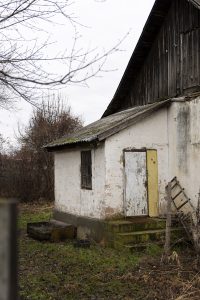
I remember one night in Jalpaiguri when I was sleeping in the same bed as my toddler brother and our caregiver, Shipra Didi. It was a typical night until I was jolted awake by a deep, booming voice. The sound was so sudden and clear that it sent my heart racing. I bolted upright, my breath caught in my throat, but everyone else was sound asleep. The house was pitch black, and I could feel my hands trembling as I clung tightly to my brother and Shipra Didi. I distinctly remember straining my eyes in the dark, trying to pinpoint where the voice came from and who might have spoken. That sleepless night etched a haunting memory in my mind, one that sends a chill down my spine every time I recall it.
My fear of the dark persisted well into my teenage years. Even as I grew older, the stories of haunted bungalows and circuit houses lingered. I was probably in college when my family and I on our visit Ajmer, stayed overnight in a quaint circuit house. It had that classic colonial architecture, with long, winding corridors and creaking doors. My brother and I shared a room while our parents slept in another. As the night wore on, I woke to find the television had turned on by itself. I nudged my brother awake, and he dutifully got up to turn it off. But the TV had a mind of its own—it would turn off only to turn back on moments later. We sat there in the dark, unsure of what was happening. The longer we stayed awake, the heavier the air felt, like an unseen force was watching us. I couldn’t shake the feeling that there was another presence in that room. We didn’t sleep at all that night, the TV continuing to play its haunting game.
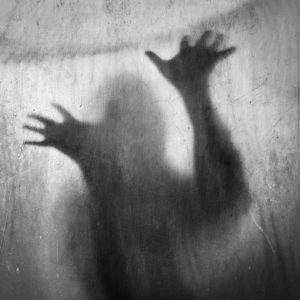
Years later, I was in Pune for my postgraduation, staying in a family friend’s house. It was a quaint place with a dining room that housed two murtis—one of the fierce Goddess Kali and the other of the benevolent Ganesh Ji. Hailing from Bengal, I thought having the Kali statue near my bed would bring protection, but instead, the night was the craziest night ever. It seemed as though my bed was shaking, like in an earthquake, but I knew there was no earthquake. I just covered myself in my quilt and shut my eyes, trying to sleep somehow. I couldn’t understand it until the next day when a friend visited and explained that the statue of Kali, known for her powerful energy, wasn’t typically kept near sleeping areas. I promptly swapped it with the Ganesh Ji statue, and that night onwards, I slept like a baby. Some things you just can’t explain.
The unexplained happenings in my life culminated when I decided to challenge my fears by watching “The Exorcist” alone in a dark room, in that very house in Pune. I shut all the curtains, turned off the lights, and let the film play in its full haunting glory. It was as if I was daring the darkness to do its worst. After the movie ended, I sat in silence, half-expecting something to happen, but nothing did. That night, I slept peacefully, as if I’d finally made peace with the ghost stories that had haunted me for so long. It was a turning point—a realization that sometimes the scariest things are the ones we create in our own minds.
From that point on, I learned to embrace the stories without letting them consume me. The bungalows, the circuit houses, the whispers of ghosts— all became distant memories that no longer kept me up at night. I realized that while the fear of the unknown can be paralyzing, it’s often just a reminder that the most extraordinary stories are the ones we carry with us. As Sir Arthur Conan Doyle once said, “Where there is no imagination, there is no horror.”